Product details
In the construction industry, various steel products play pivotal roles in ensuring the strength and stability of structures. Below is an overview of the most commonly used steel components:
Angle (L-Shaped Cross-Section)
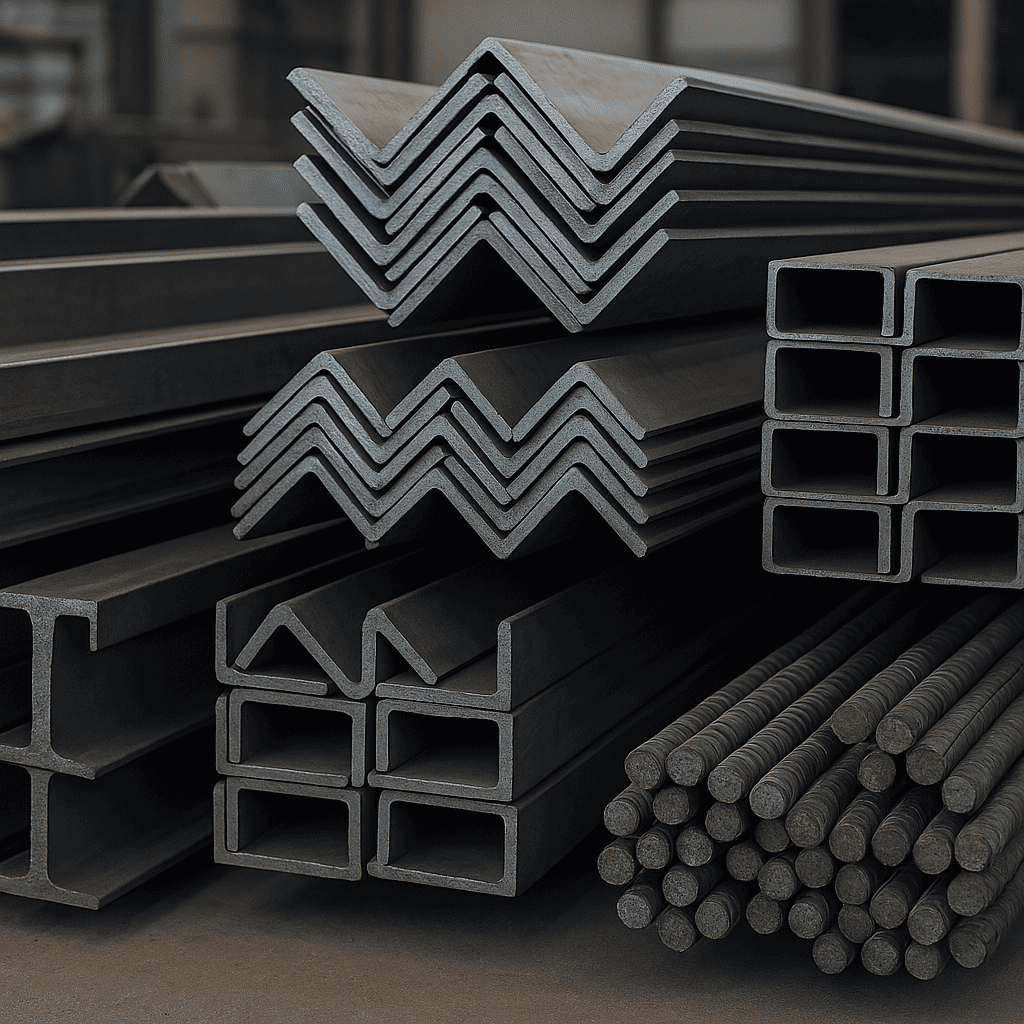
Angles, characterized by their L-shaped cross-section, consist of two perpendicular legs that can be of equal or unequal lengths. They are fundamental in providing support and reinforcement in structures. Common applications include framing, bracing, and serving as connectors in various construction projects. Their versatility makes them indispensable in building frameworks and structural supports.
Channel (C-Shaped Cross-Section)
Channels, also known as C-beams, feature a C-shaped cross-section with a flat back and two perpendicular extensions. This design offers enhanced strength and rigidity, making channels ideal for applications such as supporting floor joists, roof trusses, and wall studs. They are also commonly used in vehicle frames and other structural applications where weight and strength are critical considerations.
I-Beam (H-Shaped Cross-Section)
I-Beams, recognized by their H-shaped cross-section, consist of a central web and horizontal flanges. This configuration provides exceptional load-bearing capacity, making I-Beams essential in supporting heavy loads over long spans. They are predominantly used in constructing building frameworks, bridges, and other infrastructures requiring robust support.
Steel Plate
Steel plates are flat, rectangular sections of steel available in various thicknesses. They serve multiple purposes, including use as structural components, base plates, and gusset plates in construction. Their adaptability allows them to be cut and welded into different shapes, catering to specific project requirements.
Steel Pipe
Steel pipes are cylindrical tubes utilized primarily for conveying fluids and gases. Beyond their traditional use in plumbing and pipelines, they are also employed as structural elements in construction, such as in handrails, scaffolding, and support structures. Their strength and durability make them suitable for both load-bearing and non-load-bearing applications.
Hollow Structural Section (HSS)
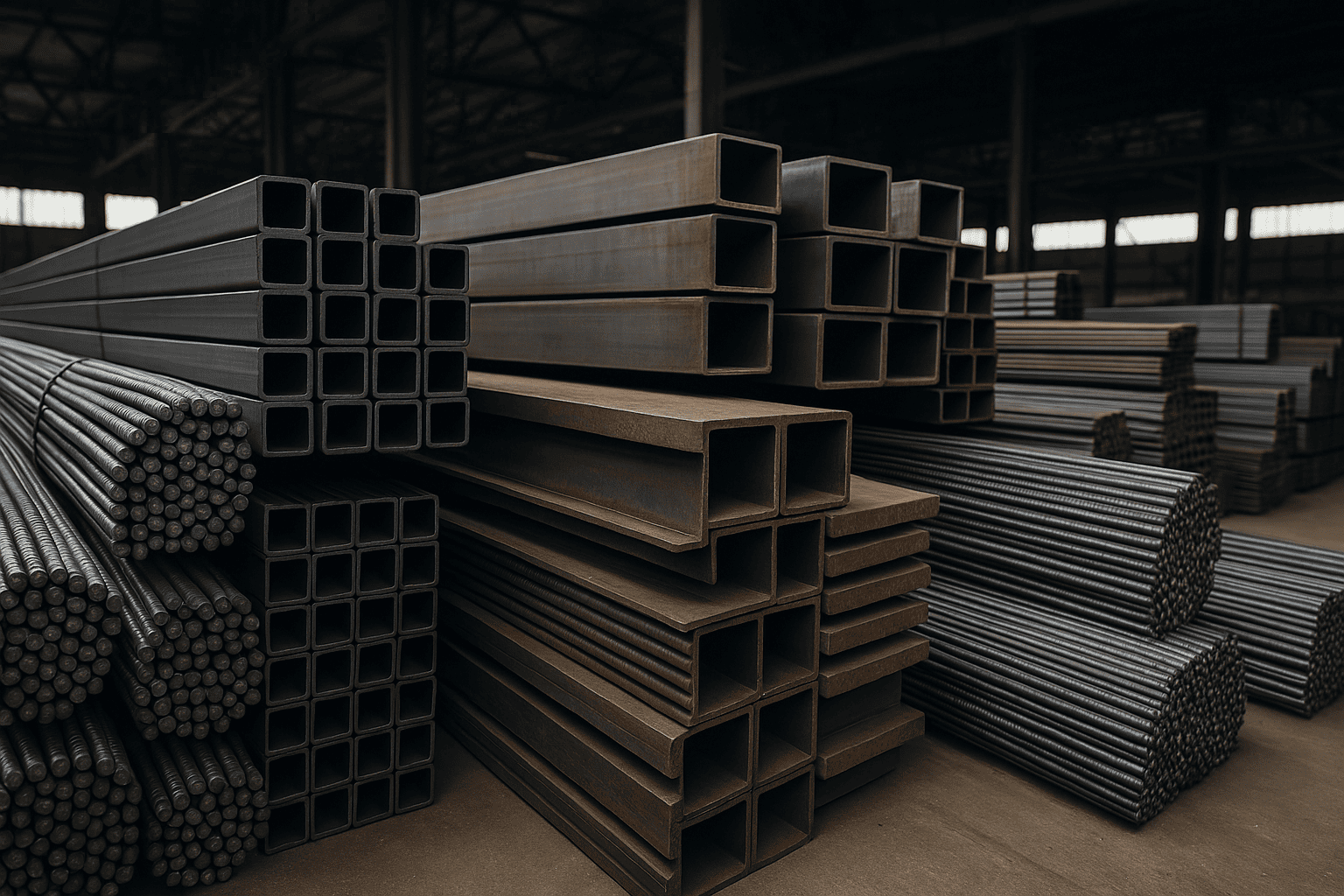
Hollow Structural Sections, encompassing square and rectangular tubes, are steel profiles with hollow cross-sections. They are widely used in construction due to their high strength-to-weight ratio and aesthetic appeal. Common applications include structural columns, beams, and frameworks for buildings and bridges. Their uniform geometry provides excellent support and load distribution.
The strategic selection and application of these steel products are crucial in achieving the desired structural integrity and design aesthetics in construction projects. Understanding their unique properties and uses enables engineers and builders to optimize material performance and ensure the longevity and safety of structures.